Hringir (Circles)
Public art proposal for Ísafjörður, Iceland
Hringir is a proposed public artwork for the shoreline at Suðurtangi in Neðstakaupstaður, Ísafjörður, near the historic Faktorshús. The location connects the work to the history of the town, where the sea, harbour and commercial life have long been intertwined.
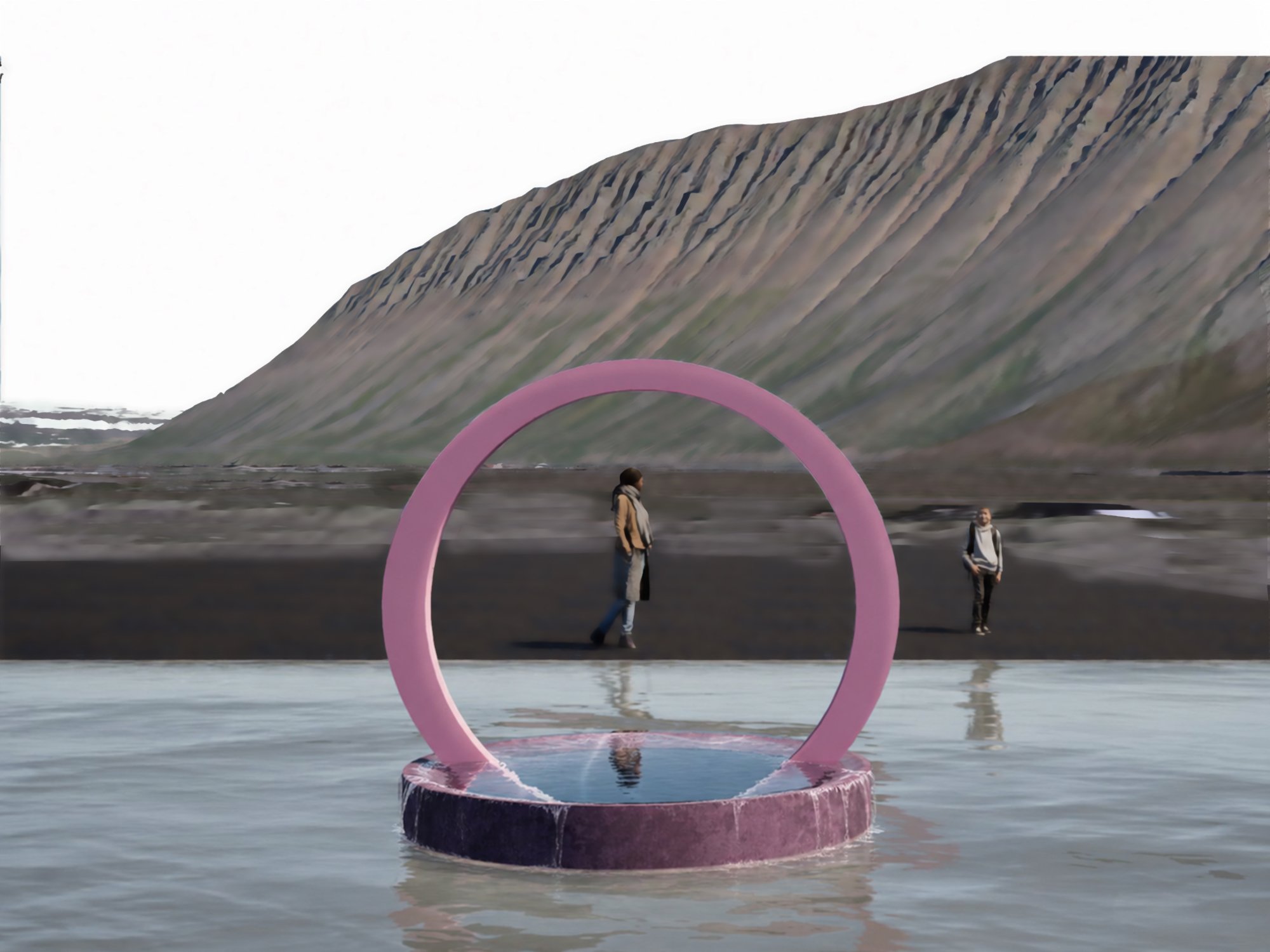
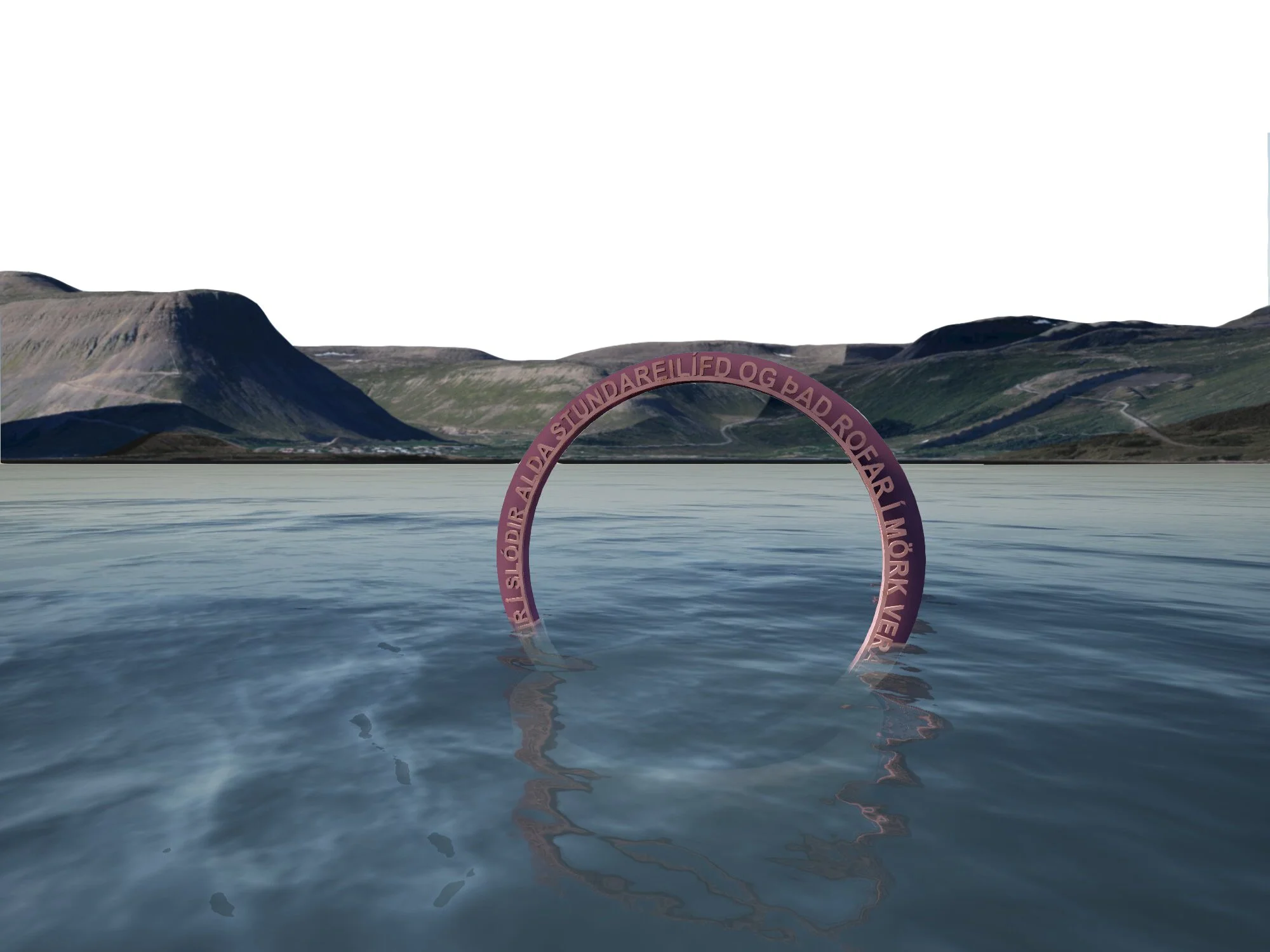
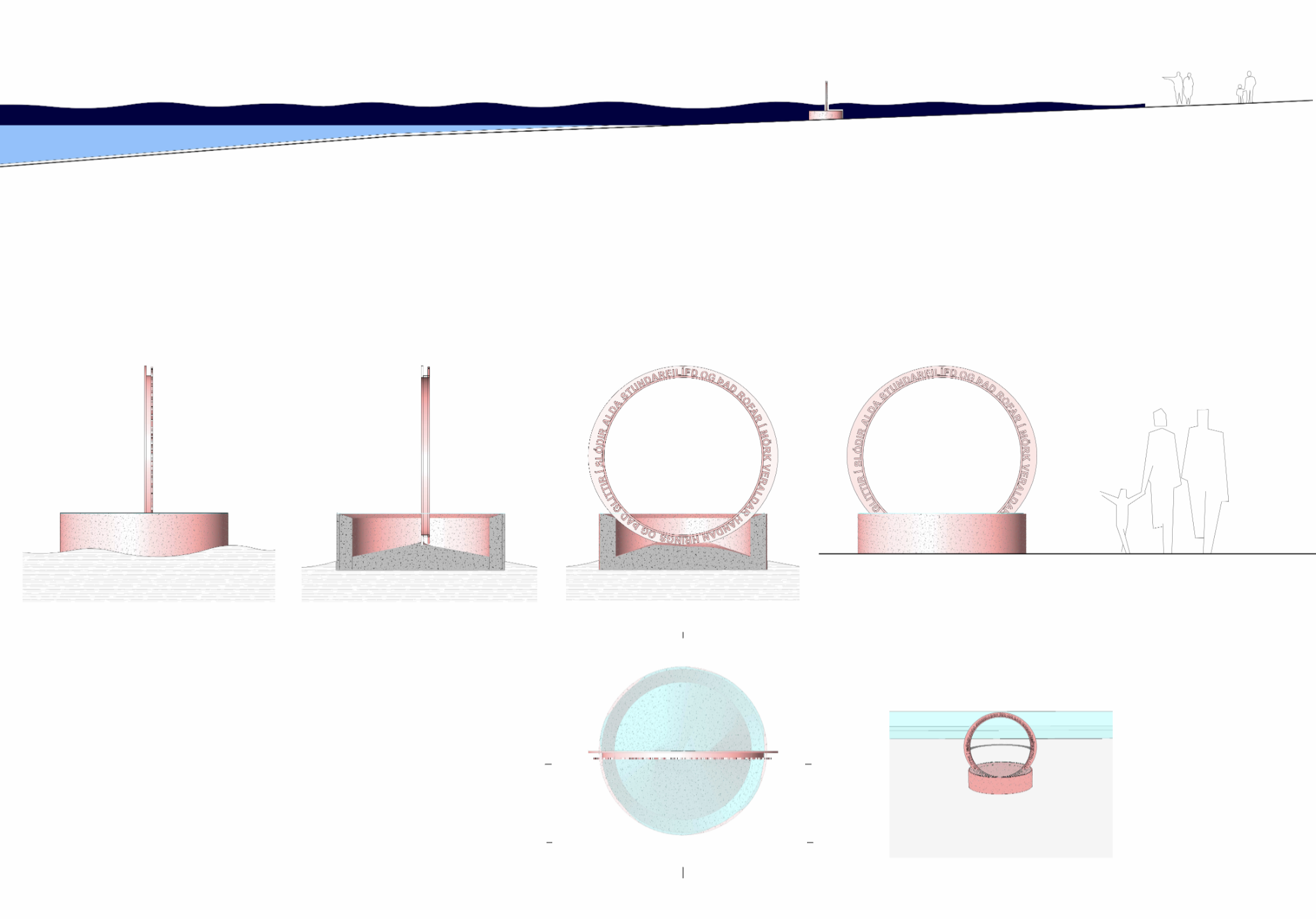
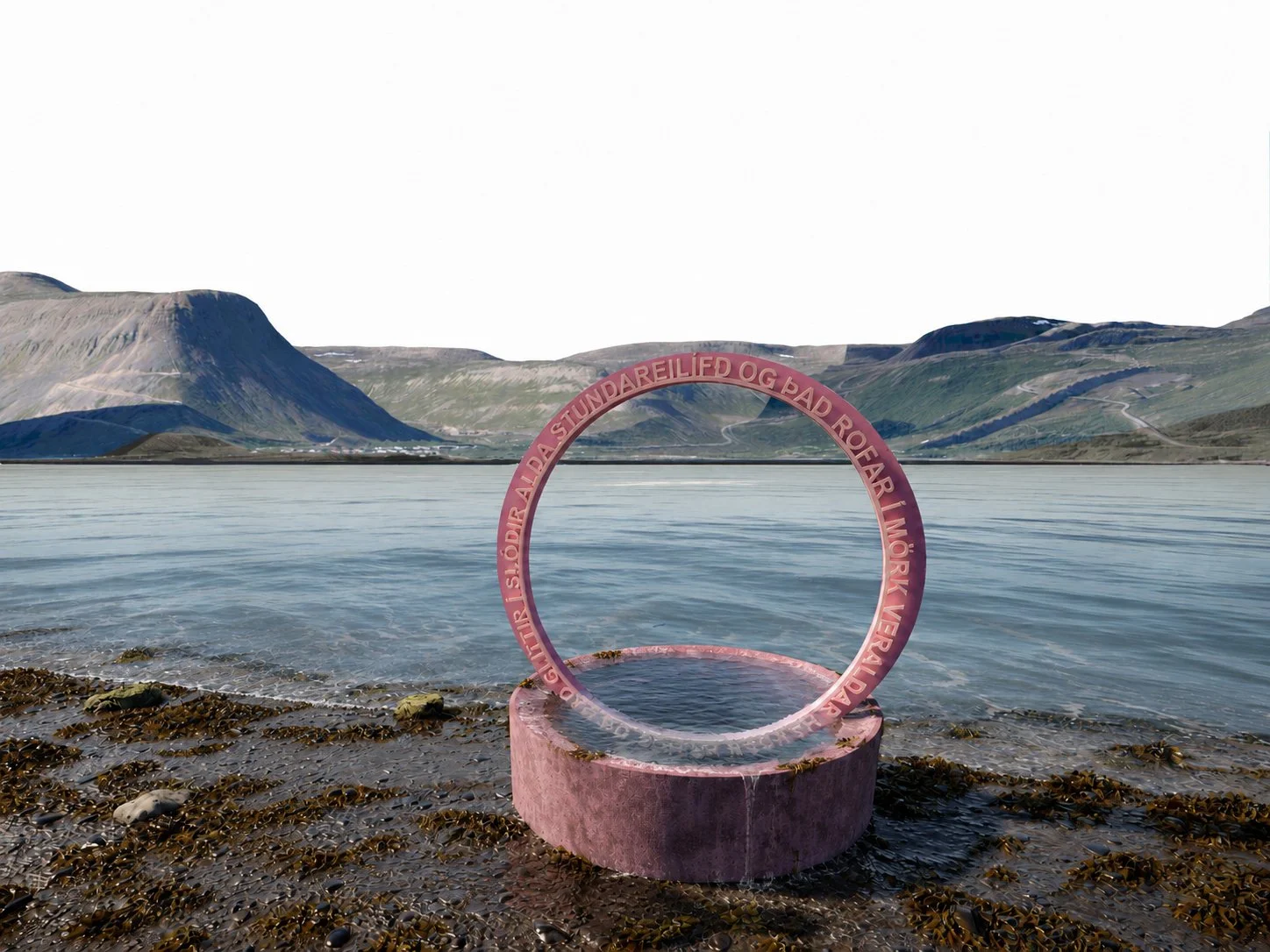
The artwork consists of a pink, oval-shaped aluminium ring set into a circular concrete basin. A text follows the shape of the ring:
“and traces of centuries glimmer, moments of eternity, and the boundaries of the world dissolve beyond the circle.”
The text has no beginning or end and can be read in a continuous loop. It refers to time, the history of Ísafjörður and the generations who have lived, worked and built their community by the fjord. The ring becomes a symbol of continuity and the cyclical nature of time, connecting the sea, the landscape and human life.
The work responds to the changing tides. At high tide, the sea covers the concrete foundation and partially submerges the ring, leaving only part of it visible above the water. As the tide recedes, the entire artwork is revealed. The basin then becomes a wishing well, holding seawater and inviting visitors to make a wish. Imagination and hope are central to this experience.
The ring has an organic, slightly irregular form inspired by the spherical shape of the Earth, referencing the globe, nature and living systems. Its pink colour evokes femininity, life and organic processes, while also referring to the marine environment and the changing ecosystems of the ocean.
The text is partly inspired by two poems by Westfjords-born Icelandic poet Steinn Steinarr: Utan hringsins (Outside the Circle) and Tíminn og vatnið (Time and Water). While the circle in Steinarr's poetry represents boundaries between worlds, Hringir opens outwards towards the landscape, the fjord and the community.
The artwork is conceived as an integral part of its surroundings, constantly changing with the tides. The sea, time and human life come together in a continuous cycle.
The proposal was developed in close collaboration with architect Sóley Lilja Brynjarsdóttir.